

Many people think they know what graphic design is. They associate it with billboards, logos, magazines, video games, and vector graphics. But what exactly does it mean? Graphic design is both a profession and an art form—an expression of visual aesthetics and creativity.
For those who prefer a precise explanation, here’s a basic definition:
Graphic Design Definition
Graphic design is the art of visual communication that combines images, text, and ideas to convey a message or achieve a desired effect. In other words, it’s communication design—a way of visually delivering ideas and information.
However, graphic design is not a black-and-white concept. To fully understand it, it’s essential to explore the core elements and principles of design.
Elements of Graphic Design
To create effective designs, one must first understand the fundamental building blocks. These are the basic elements of graphic design:
- Line – A foundational element that forms structure and directs visual flow.
- Form – Two-dimensional geometric, organic, or abstract shapes that help establish balance.
- Color – Used to attract attention, convey emotion, and set the tone.
- Typography – Involves font choice, size, spacing, and alignment to enhance readability and tone.
- Texture – Adds depth and realism, either visually or physically.
- Size – Helps define hierarchy and importance.
- Space – Creates visual breathing room between elements and emphasizes focus.
Principles of Graphic Design
Design principles guide how elements are arranged for an effective composition:
- Balance – Achieved through symmetrical or asymmetrical layout of elements.
- Alignment – Visually connects design elements and creates order.
- Proximity – Groups related items together to reduce clutter.
- Repetition – Reinforces a consistent visual identity.
- Contrast – Emphasizes key elements and helps direct user attention.
Graphic Design Tools
Graphic design has evolved significantly with digital technology. Yet, traditional tools like pencil and paper still play an important role in the creative process.
Most designers follow a hybrid approach—starting with sketches and then moving to digital platforms. Popular software includes Adobe Photoshop, Illustrator, CorelDRAW, and Sketch.
Types of Graphic Design
Graphic design spans various specialties, including:
- Corporate Design – Visual identity and branding for companies
- Marketing Design – Advertisements, promotional materials
- Publication Design – Books, newspapers, and magazines
- Web Design – Visual and functional aspects of websites
- UX Design
- UI Design
UX Design
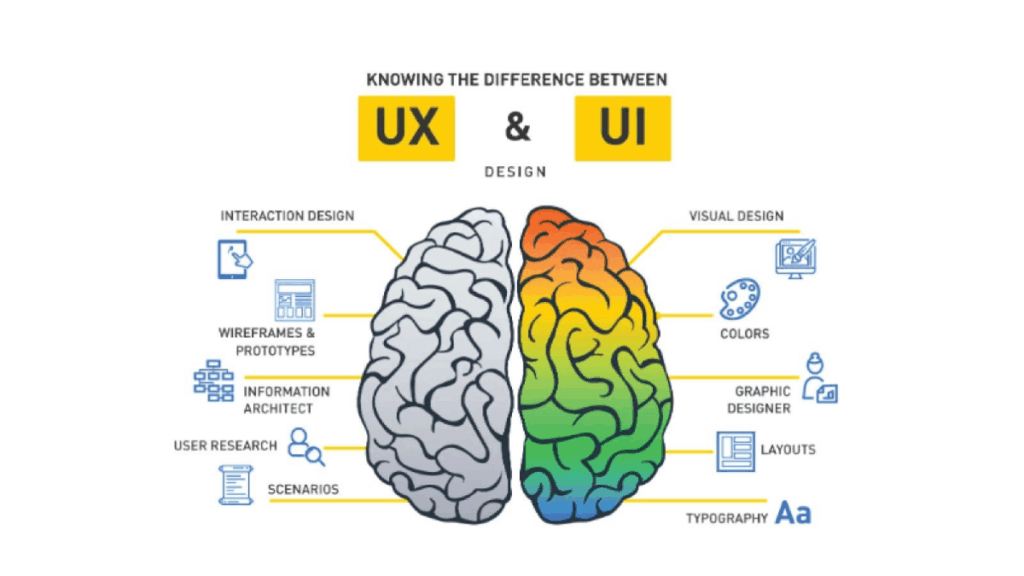
User Experience (UX) Design focuses on how users interact with digital products like websites and apps. It’s about improving usability, accessibility, and user satisfaction. UX designers analyze behavior and refine structures to create intuitive experiences.
UI Design
User Interface (UI) Design deals with the look and feel of digital interfaces. It includes buttons, menus, notifications, and interactive graphics. UI design anticipates user needs and makes navigation clear and visually appealing.
What is a Graphic Designer?
Simply put, graphic designers are visual communicators and problem-solvers. They must understand user psychology and adapt their designs to specific target audiences.
Depending on their path, graphic designers may take on roles such as:
Agency Graphic Designer
Works in a design agency, often juggling multiple clients and brands. This role demands high skill, speed, and a specialized focus on specific areas of design.
In-House Graphic Designer
Employed by a company to handle internal branding and design needs. In-house designers are typically generalists, covering all visual communication for the business.
Freelance Graphic Designer
Freelancers operate independently and manage all aspects of their business—from client acquisition to project delivery. Success in this role requires strong digital marketing skills, excellent communication, and self-discipline.
Final Thoughts
Graphic design is a multifaceted and dynamic profession. Understanding its core elements, principles, and tools is essential for anyone entering the field or working with design. Whether you’re pursuing a career as a freelancer, working in-house, or joining a creative agency, staying curious and continuously learning will drive your growth as a designer.